

Quick Answer: The clearest signs your drain is blocked include slow drainage, gurgling noises, recurring backups, sewer odors, and water rising in the toilet when other fixtures run. These clues help you identify whether the blockage is localized at one fixture, stuck in a branch line, or affecting the main sewer line. If multiple fixtures act up together especially the lowest drains treat it as urgent. Confirm patterns, check the cleanout if you have one, and avoid forcing water through the system. When symptoms point to the main line, camera diagnosis and professional cleaning prevent sewage exposure and costly water damage.
Why These Signs Matter More Than You Think
When signs your drain is blocked start showing up, the problem is rarely just annoying. Blockages in a home’s drain-waste-vent (DWV) system can escalate into raw sewage backups, bacteria exposure, and interior water damage. In older neighborhoods with mature trees and aging underground sewer pipes can be especially prone to tree root intrusion, corrosion, or pipe offsets.
Blocked drainage also creates pressure and trapped air. That’s why the first symptom might be gurgling sounds from drains or bubbles in toilet water. Your plumbing is literally signaling that flow and venting aren’t working normally.
Quick Fix: If two fixtures act up at once (for example, toilet + shower), stop running water for 10 minutes and observe whether levels rise on their own. Rising water without use strongly suggests a deeper restriction.
The Most Reliable Signs Your Drain Is Blocked
When a drain pipe clogged condition develops, it usually starts with gradual resistance rather than a sudden stop. Water may still drain, but it does so slowly and inconsistently, allowing debris to settle deeper inside the pipe. Over time, this partial restriction becomes more compacted, making surface-level fixes ineffective.
Here are the high-confidence symptoms that show up again and again in real main-line and branch-line clogs:
- slow-draining sinks, tubs, or showers that worsen daily
- standing water in fixtures after normal use
- gurgling noises after flushing or draining
- unpleasant sewer smells near drains
- frequent plunging needed to “keep things usable”
- water backing up into shower or tub when the toilet flushes
- washing machine drain overflow or toilet overflow during laundry
- dark or contaminated water appearing in a tub, shower, or sink
If you’re seeing several of these, it’s not random, it’s pattern-based plumbing behavior.
Local Clog vs Branch Line vs Main Sewer Line
A key part of finding the source is understanding where clogs typically occur:
A localized fixture clog usually affects one sink, one tub, or one toilet. Branch line clogs affect a group of fixtures (like a bathroom sink + tub). A main sewer line blockage is system-wide and often shows up as multiple fixtures clogged, especially on the lowest level.
If you want to confirm the most likely category quickly, it helps to involve Clogged drain experts early especially when symptoms involve more than one fixture or sewage risk.
Symptom Patterns That Reveal the Source
What you notice | What it usually means | Likely location |
One sink drains slowly, others fine | localized fixture clog | trap/nearby line |
Toilet won’t flush + tub gurgles | shared branch restriction | branch line clog |
Water backing up into shower or tub | downstream restriction | branch or main |
Toilet overflows when washer drains | heavy downstream blockage | main sewer line blockage |
Lowest drain backup (floor drain/lowest tub) | system-wide failure | main line cleanout inspection area |
Step-by-Step Approach Before Escalating Repairs
Before assuming the worst, use a structured process that reduces guesswork, avoids pipe damage, and helps you locate the blockage accurately. You’re not just clearing a clog, you’re identifying whether the problem is local, shared, or system-wide.
Step 1:
Start by listing every fixture and whether it’s normal, slow, or backing up. If you see multiple fixtures clogged, you’re likely past a localized issue.
Step 2:
Run water for 30-60 seconds in a sink while someone watches the toilet and tub in the same bathroom. If bubbles rise in the toilet water or you hear gurgling sounds from drains, trapped air is being displaced by a partial blockage downstream.
Step 3:
The lowest drain in the home often shows problems first during a main line blockage. If that lowest fixture is backing up, treat it as urgent and stop using water.
What Causes a Drain to Block in the First Place
Most clogs are predictable and preventable. Common causes include:
- fats, oils, and grease (FOG) that harden in pipes
- hair buildup and soap scum in bathroom lines
- unflushable items like wipes, paper towels and wipes, feminine products
- excess toilet paper (especially with low-flow toilet models)
- coffee grounds and food waste, plus garbage disposal misuse
- aging sewer lines with corrosion or narrowing
- tree root intrusion into underground sewer pipes
- collapsed or offset pipes from soil shift or age
Aging sewer lines and root pressure can be a repeat issue even when indoor habits are good.
Quick DIY Checks That Don’t Make Things Worse
Repeated drain stoppages often indicate that debris remains inside the system even after temporary clearing. When blockages return within days or weeks, it’s usually because the pipe walls were never fully cleaned, allowing buildup to reform quickly. Some DIY steps are as safe as diagnostics. Others can push debris deeper or damage pipes. These checks are low-risk and useful:
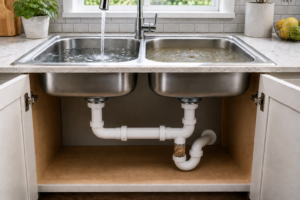
- Inspect under-sink traps for visible buildup (especially hair and soap scum)
- Use a plunger correctly (cup plunger for sinks, flange for toilets)
- Avoid chemical drain cleaners as a first move; they can damage pipes and create hazards
- Try hot water cautiously for grease film (not boiling if you have PVC)
Quick Fix: If you plunge, do it in a steady rhythm for 20-30 seconds. Random force can splash contaminated water and doesn’t build consistent pressure. Attempting to fix clogged drain pipe problems with repeated plunging or chemicals can unintentionally force debris deeper into the system. While these methods may restore brief flow, they rarely resolve the underlying cause when buildup extends into branch or main lines.
Many of these repeat issues are explained well by Common Drain Blockages Caused by Hair, Grease, and Soap, which is why preventing pipe-wall buildup matters as much as clearing a single event clog.
The Where Is It? Decision Tree
Use this to locate the source in under 2 minutes:
- If only one fixture is slow → localized fixture clog is likely.
- If a toilet and tub/sink in the same bathroom act up → branch line clog is likely.
- If fixtures on different floors act up → main sewer line blockage becomes more likely.
- If the lowest drain backs up first → treat as main-line until proven otherwise.
- If the cleanout shows standing water → confirm a sewer-level issue immediately.
The Cleanout Test That Confirms a Sewer Problem
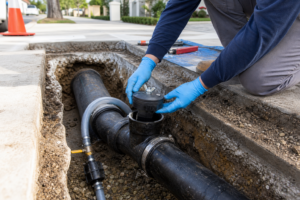
Most properties have a sewer access point called a cleanout pipe / sewer cleanout. If you can safely locate it and you see water standing in the pipe or overflowing at the cleanout, you’re not dealing with a small sink problem, you’re dealing with a main-line issue.
This is where the question of how to tell if sewer is backed up gets answered clearly: cleanout overflow, lowest drain backup, and multi-fixture symptoms are your strongest confirmation signals.
If you don’t know where your cleanout is or you’re unsure how to inspect it safely, use a local plumbing company because opening the wrong cap or handling sewage flow incorrectly can create an avoidable health hazard.
When Tools Help and When They Don’t
For minor or localized clogs, a plumbing auger / drain snake can help reach beyond a trap. But for system-wide restrictions, snaking often creates a temporary channel without cleaning pipe walls.
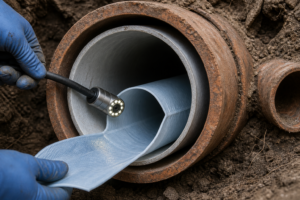
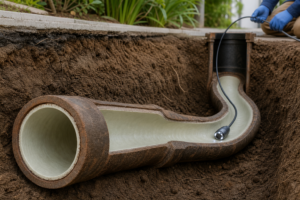
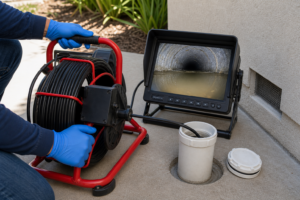
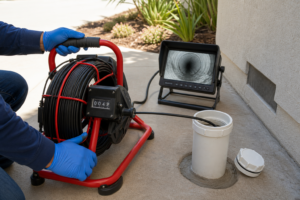
A drain inspection camera is often the turning point for accurate diagnosis. It can identify root intrusion, cracks, offsets, and heavy grease lining without guesswork.
If your symptoms suggest the blockage is deeper, a Sewer Camera Inspection Near You is one of the fastest ways to confirm the exact location and choose the right fix without trial-and-error.
Method vs What It Actually Solves
Method | What it can solve | What it usually misses |
Plunger | localized fixture clog, mild toilet issues | pipe-wall buildup, branch/main line |
Plumbing auger / drain snake | clumps, paper masses, shallow branch issues | grease lining, root intrusion |
Hydro jetting | pipe-wall buildup, grease, sludge, some roots | collapsed or offset pipes (needs repair) |
Drain inspection camera | exact obstruction location + pipe condition | not a cleaning method on its own |
The Deep-Clog Scenario People Miss
Sometimes the issue isn’t a simple fixture clog, it’s a clogged drain deep in pipe where debris has built up beyond the reach of standard tools. This is common after months of gradual buildup, especially when fats, oil, and grease combine with paper products and food waste.
If you previously tried to unblock a clogged drain deep in pipe and the symptoms returned quickly, it’s a strong clue that the line wasn’t fully cleaned, only opened.
What Backups During Laundry Usually Means
A classic diagnostic sign is appliance-triggered backups. If your toilet overflows when washer drains or the washing machine drain pipes overflow and then a toilet won’t flush, it usually means the system is overwhelmed downstream.
This isn’t just one drain acting up its pressure and volume exposing a restriction in shared piping, commonly in branch lines or the main line.
Emergency Red Flags (Stop Using Water)
If any of these happen, pause all water use and escalate:
- visible sewage backups in tubs, showers, or floor drains
- dark or contaminated water returning after you stop using fixtures
- sewer smells throughout the house (not just one sink)
- drains backing up in house across multiple rooms
- lowest drain backup that reappears quickly after clearing attempts
A main drainage pipe clogged scenario affects the entire plumbing system and often reveals itself through backups at the lowest drain first. This type of blockage requires careful diagnosis, as continued use can lead to sewage exposure and structural water damage.
Prevention That Actually Works (Without Being Overkill)
Once you fix the immediate problem, focus on prevention. Most homeowners don’t need complicated routines, they need the right habits.
High-Impact Prevention Steps:
- Never pour fats, oils, and grease into drain wipe pans first.
- Use drain strainers for hair and food scraps.
- Avoid “flushable” wipes; they’re a top source of unflushables.
- Run hot water after cooking cleanup (carefully) to reduce grease film.
- Schedule periodic checks if you have mature trees near sewer paths.
These steps help prevent drain clogs and reduce long-term pipe-wall buildup.
Get Fast Help From Coast to Coast Plumbing
If you’re seeing signs your drain is blocked and the source isn’t obvious or you suspect a main-line issue, don’t wait for a backup to become a disaster. Coast to Coast Plumbing can diagnose the problem quickly and restore safe drainage before damage spreads.
Call Coast to Coast Plumbing: 310-275-5800
FAQs About Signs Your Drain Is Blocked
The most common signs include slow drainage, gurgling noises, sewer odors, repeated plunging, and backups into nearby fixtures.
If only one fixture is affected, it’s often local. If multiple fixtures are affected, especially the lowest drains, it may be the main sewer line.
Bubbles and gurgling usually mean trapped air is being displaced by a downstream restriction in a branch line or main line.
Yes. Sewage contains bacteria and contaminants, and backups can quickly cause health risks and property damage.
Stop using water immediately, avoid plunging aggressively, and arrange a professional inspection and cleaning.