

Quick Answer: To unblock a clogged drain deep in the pipe, you must identify whether the blockage is past the P-trap or inside shared waste lines, then apply controlled pressure, long-reach tools, and full pipe-wall cleaning. Basic plunging and snaking may restore temporary flow, but deep clogs usually involve grease, sludge, or debris bonded to the pipe wall. When backups return or multiple fixtures are affected, hydro jetting is the most reliable way to fully clear the pipe and prevent repeat failures.
What Makes a Drain Clog Deep Inside the Pipe
When homeowners search how to unblock a clogged drain deep in a pipe, they are rarely dealing with debris sitting near the drain opening. A deep clog forms farther into the drain system often beyond the P-trap, inside horizontal waste lines, or near the main sewer line.
At this depth, debris sticks to the pipe wall instead of floating freely. That’s why water may drain briefly and then slow again. These clogs are harder to reach, harder to break apart, and far more likely to return if only surface methods are used.
In older homes, deep clogs are especially common due to aging pipe materials, long drain runs, and years of gradual buildup inside underground pipes.
Warning Signs That the Blockage Is Deep in the System
Deep clogs usually announce themselves through patterns, not single events.
- slow-draining water that never fully clears
- standing water after fixture use
- frequent backups that return days later
- multiple fixtures affected at the same time
- gurgling sounds or gurgling noises after draining
- unpleasant odors rising from drains
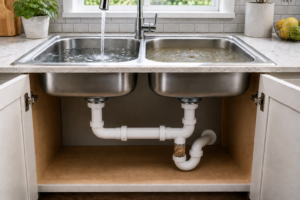
- water draining slowly from sink even after plunging
- visible sewage backups at low points
If you’re seeing more than one of these, you are likely dealing with a drain pipe clogged somewhere deep in the system.
Why Deep Clogs Form and Keep Coming Back
Deep clogs form as materials gradually coat the pipe interior and narrow the flow path.
Common contributors include hair buildup combined with soap scum, food particles and food waste, and hardened fats, oils, and grease (FOG). Kitchen lines often trap coffee grounds, eggshells, pasta and rice, while toilets can create a toilet paper jam that captures other debris. Non-degradable items like wet wipes and paper towels worsen the problem.
Over time, these materials compress into a dense mass that creates a clogged waste pipe rather than a simple surface obstruction.
Surface Clog vs Deep Pipe Blockage
Feature | Surface Clog | Deep Clog |
Location | Drain opening | Waste lines or sewer main |
Affects multiple fixtures | No | Yes |
Clears with plunger | Often | Rarely |
Causes odors | No | Yes |
Risk of sewage backup | Low | High |
Many homeowners ignore early signs of blocked drain, assuming the issue is minor, when those symptoms are often the first indication of a deeper pipe restriction forming beyond the P-trap.
Step-by-Step Approach Before Escalating to Advanced Cleaning
Before moving to advanced drain cleaning methods, it’s important to follow a logical sequence that confirms the clog’s depth and avoids unnecessary pipe damage. Deep blockages often respond differently than surface clogs, and starting with the right steps can restore flow or clearly signal when escalation is needed.
Step 1:
Remove the drain cover and clear visible debris. This won’t solve a deep issue, but it prevents surface material from interfering with deeper clearing attempts.
Step 2:
Plunging can help dislodge a deep obstruction when pressure is applied correctly.
Quick Fix: Seal overflow openings with a wet cloth to maintain suction.
Use slow, rhythmic plunges rather than aggressive force. If water suddenly drains, the blockage has shifted but that doesn’t mean it’s gone.
Step 3:
A long drain snake or plumbing snake can reach deeper sections of pipe. Feed it slowly, rotate gently, and pull debris out rather than forcing it forward.
This step helps homeowners to learn about how to unclog a deep clog, but it rarely removes all buildup from the pipe wall.
Why Snaking Alone Usually Fails Long-Term
Snaking often creates a temporary channel through debris without removing the coating along the pipe interior. That’s why a stubborn drain clog may disappear briefly and then return.
If grease, sludge, or organic residue remains bonded to the pipe wall, flow restrictions rebuild quickly especially in horizontal drain runs.
When to Stop DIY and Look Deeper
Stop DIY attempts and escalate when:
- Two or more fixtures are slow or backing up
- Gurgling sounds occur after draining
- Odors persist even after clearing attempts
- Backups return within days
- Sewage appears at the lowest drain
At this point, the problem is no longer about clearing and opening, it’s about restoring full pipe diameter.
Why Hydro Jetting Is the Most Reliable Solution for Deep Clogs
Hydro jetting uses specialized equipment that delivers high-pressure water jets through the pipe. These jets scour the entire pipe wall, breaking apart grease, sludge, and organic buildup that mechanical tools leave behind.
For homeowners researching how to clear pipe blockage permanently, hydro jetting is the method that actually resets the pipe rather than poking a temporary hole through debris.
This process should only be performed by Reliable Hydro Jetting Technicians, who can calibrate pressure based on pipe material and condition.
Cleaning Methods Compared
Method | Clears Opening | Cleans Pipe Walls |
Plunger | Yes | No |
Drain snake | Partially | No |
Chemical cleaners | No | No |
Hydro jetting | Yes | Yes |
Kitchen and Bathroom Lines That Fail Repeatedly
If you have a kitchen sink clogged and tried everything, then buildup is deep inside the line. Bathroom drains fail when hair and soap residue bond to the pipe wall over time.
These patterns align directly with Causes of Rapid Hair, Grease, and Soap Buildup in Drains, which explains why surface cleaning rarely solves recurring issues.
Main Sewer Line vs Branch Line Problems
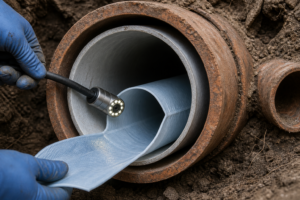
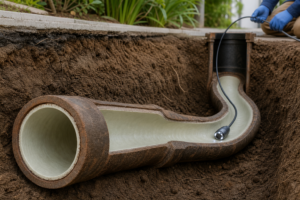
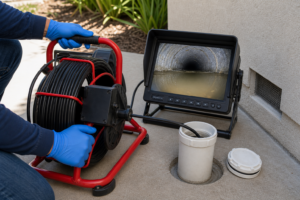
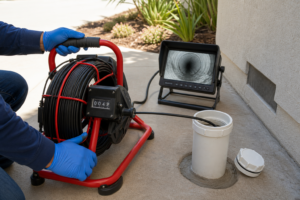
When multiple fixtures back up simultaneously, the issue may involve shared waste lines or the main sewer line itself. Camera inspection is often used to confirm whether the blockage is caused by heavy buildup, root intrusion, or pipe offsets.
Best Plumbing Company can determine whether hydro jetting alone will resolve the issue or if structural repair is required.
Preventing Deep Drain Problems From Returning
Once the pipe is fully cleaned, prevention becomes critical.
- Avoid pouring grease or oil down drains
- Use strainers to catch hair and food debris
- Flush problem drains periodically with hot water
- Learn habits that prevent drain clogs long-term
For older systems, periodic evaluation by Drain Cleaning Experts helps catch buildup before it turns into another deep blockage.
Call Coast to Coast Plumbing for Lasting Drain Solutions
If you’re done fighting repeat clogs and temporary fixes, it’s time to restore your pipes the right way. Coast to Coast Plumbing provides professional hydro jetting and camera-guided solutions designed to clear pipes completely and keep them flowing.
📞 Call Coast to Coast Plumbing at 310-275-5800
Clean pipes. Long-term results. No repeat headaches.
FAQs About How to Unblock a Clogged Drain Deep in Pipe Systems
Hydro jetting is the most effective method because it removes buildup from the pipe wall instead of creating a temporary opening.
They return when residue remains inside the pipe, allowing grease and debris to rebuild quickly.
They may help mild organic buildup but will not remove hardened grease or heavy debris deep in the line.
If multiple fixtures back up or sewage appears at low drains, the main line may be involved.
Call a professional when DIY methods fail, backups return, or sewage is visible.