




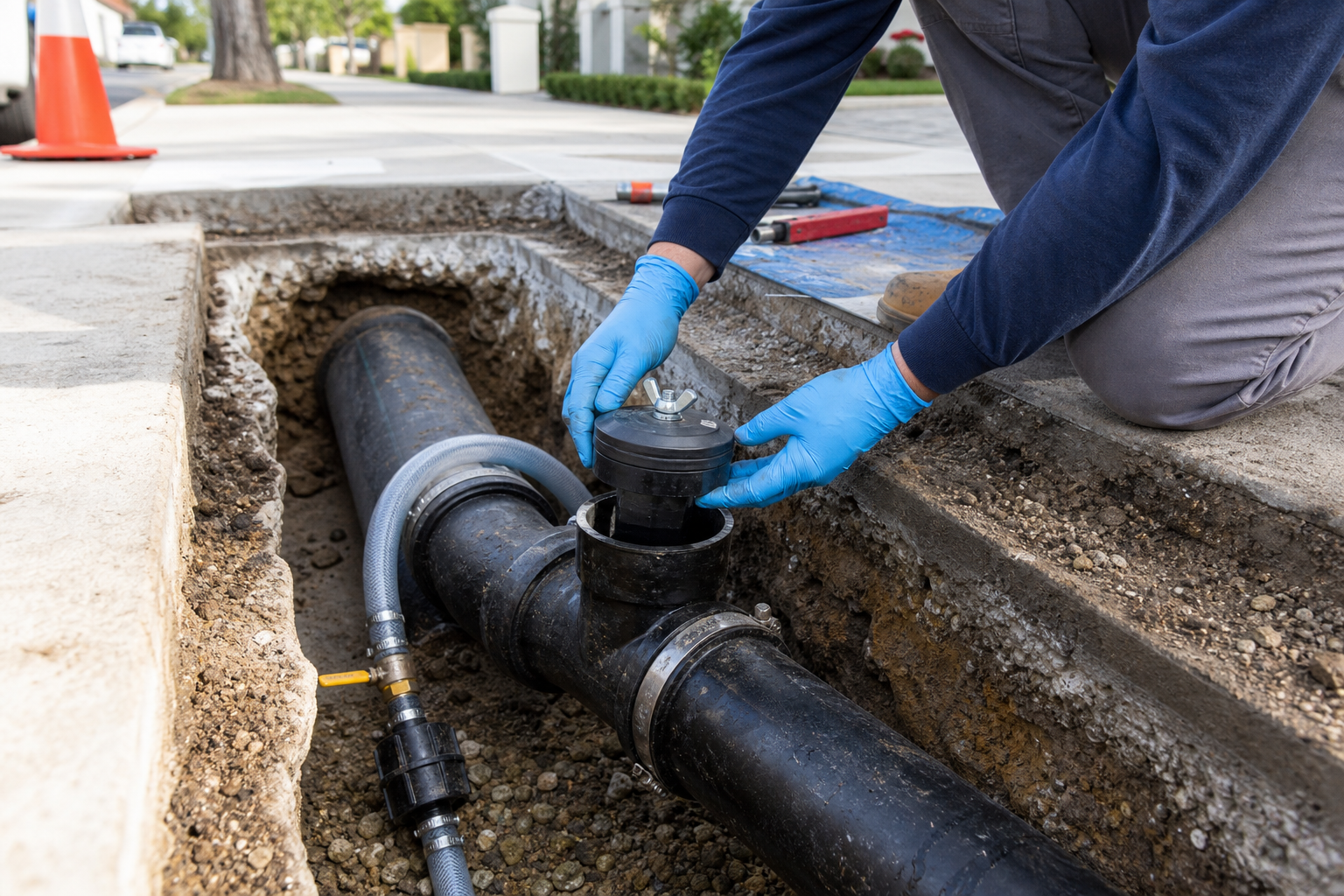
Assume you should not use toilets, sinks, showers, laundry, or other water-using fixtures during a sewer line repair until the repair crew tells you exactly what is safe. Your fresh-water supply may still work, but most of that water becomes wastewater as soon as it goes down a drain. If the sewer lateral is open, disconnected, capped, being lined, or under test, that wastewater may enter the work area or interfere with the repair.
Some projects use a verified temporary bypass or isolate only one part of a larger plumbing system. That can change the instructions, but it does not create automatic permission to use every fixture. The plumber who can see the repair setup must identify which drains are affected, whether a bypass is operating, and when normal discharge may resume.
Why Running Water Can Affect an Open Sewer Repair
Water from a faucet does not disappear after it leaves the sink. Toilets, showers, tubs, washing machines, and dishwashers also send wastewater into branch drains that usually connect to the building sewer. During sewer line repair and replacement, a section of that route may be disconnected from the rest of the line.
Using a fixture while the downstream pipe is open can send water, soap, food debris, or sewage toward the repair opening. That creates avoidable contamination and can force the crew to stop work. Even a small sink flow may matter if it reaches a pipe section that is being cleaned, measured, joined, sealed, or tested.
Do not assume that a fixture is safe because it is on another floor or at the opposite end of the home. Plumbing routes vary, and two fixtures that seem far apart may join before the damaged section. Ask the crew to name the affected fixtures instead of trying to map the system by running water.
The Repair Method Changes the Water-Use Instructions
An excavation repair may expose and remove a damaged section of sewer. Until the replacement pipe is connected and tested, wastewater needs to stay out of that opening. A street excavation sewer repair can also involve coordination beyond the property, but the household restriction still depends on the exact point where the private line is isolated.
Trenchless work has its own sequence. During trenchless pipe lining, the host pipe may be cleaned, inspected, prepared, lined, cured, and checked again. Sending wastewater into the line during one of those stages can interrupt the controlled work. The fact that little excavation is visible does not mean the sewer is available for normal use.
Pipe bursting and sectional replacement also require controlled disconnection and reconnection. A camera or flow test may follow the physical repair. Each method has a different setup, so a restriction from a previous job is not a reliable schedule for the current one.
A Temporary Bypass Must Be Confirmed, Not Assumed
A temporary bypass routes flow around a work section. When one is installed and operating, the crew may permit certain fixture use. The safe amount and timing depend on what the bypass serves, how it is monitored, and which drains actually feed it.
Do not move a hose, open a valve, remove a plug, or adjust bypass equipment. Do not treat a visible hose or pump as proof that all toilets and appliances can run. Ask the crew:
- Which fixtures are connected to the bypass?
- Are toilet flushes allowed?
- Can the washing machine or dishwasher complete a full cycle?
- Is there a period when all discharge must stop for a connection, cure, or test?
- Who will tell the household when restrictions change?
A direct answer should apply to the exact property and repair stage. If the crew has not confirmed the setup, keep affected fixtures off.
Plan Household Water Needs Before Work Starts
Ask for the expected stop-use time before the crew opens or isolates the line. The actual restart time can change after the pipe is exposed or inspected, so plan for the restriction without treating an estimate as final clearance.
Practical preparation may include:
- Finish showers, laundry, and dishes before the confirmed cutoff.
- Turn off scheduled appliance cycles that could start during the repair.
- Tell everyone in the home which toilets, sinks, tubs, and appliances are restricted.
- Place a simple reminder near affected fixtures so a guest does not use them by mistake.
- Keep children and pets away from barriers, hoses, equipment, and the excavation.
- Ask whether any tenant, accessory unit, or shared drain has separate instructions.
- Keep drinking water available without pouring unused water into a restricted drain.
Do not shut off the main water supply unless the plumber asks you to. The supply side and sewer side are different systems, and the crew may need water for an approved test. The goal is to prevent uncontrolled drain discharge, not to change valves without direction.
What to Do If Someone Uses a Fixture by Mistake
Stop the fixture or appliance as soon as it is safe. Tell the crew what was used, approximately when it happened, and whether it was a brief faucet flow, toilet flush, shower, or appliance cycle. That information helps the plumber inspect the work zone and decide whether cleaning, drying, repositioning, or another check is needed.
Do not flush again to see where the water goes. Do not open a cleanout or approach the excavation to look for flow. Repeated testing can send more wastewater into an isolated line and creates unnecessary exposure.
An accidental use does not tell you whether the repair has failed. It tells the crew that the controlled conditions may have changed. Let them inspect the exact connection and repair stage before work continues.
Wait for Reconnection and Test Clearance
A covered trench or a quiet work area does not prove that the sewer is ready. Connections may still need to be secured, a liner may still be curing, or the repaired section may be awaiting a camera or flow check. A sewer camera inspection can document the interior condition, but only the repair crew can confirm the full restart sequence for that job.
Before normal use resumes, ask for a clear statement that:
- The repaired section is connected or the approved bypass is operating.
- Required curing, sealing, or connection work is complete.
- The affected route has passed the crew’s inspection or test.
- Temporary plugs, caps, or isolation equipment have been handled as planned.
- Household fixtures may return to normal use.
If only limited use is allowed, ask which fixtures, how much use, and until what event. Clear instructions are safer than guessing from the appearance of the jobsite.
Prepare for Sewer Repair With Clear Instructions
Water use during a sewer line repair depends on the exact plumbing route, repair method, isolation point, and temporary flow plan. The safest default is to keep affected fixtures off until the crew provides property-specific clearance.
Before sewer repair, call Coast to Coast Plumbing at (310) 275-5800 to discuss the proposed work, affected fixtures and access. Ask the crew when water use must stop and how they will confirm that normal use can resume.