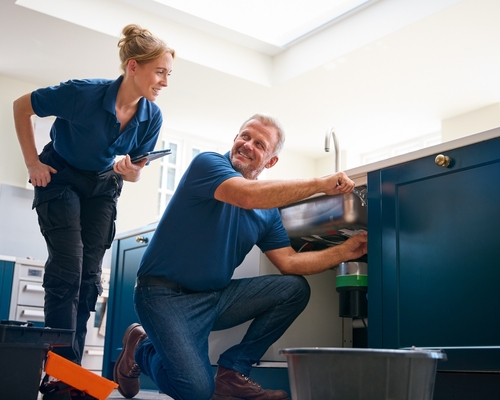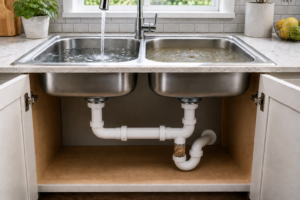



You clear the kitchen drain. It works fine for two weeks. Then it starts backing up again. Same sink, same slow gurgle, same frustration.
If this cycle is playing out in your Glendale home, the problem is almost certainly not at the drain opening. It is deeper in the line – and understanding what is happening between your kitchen trap and the sewer lateral is how you break the cycle permanently.
The Real Problem Is Usually 15 to 40 Feet From the Sink
Kitchen drains connect to a branch line that runs horizontally through the wall or floor before tying into the main drain stack. In Glendale homes built before 1970 – which includes large swaths of the Rossmoyne, Sparr Heights, Verdugo Woodlands, and Adams Hill neighborhoods – those branch lines are typically 1.5-inch or 2-inch cast iron.
Cast iron corrodes from the inside. Over decades, the interior surface develops rough scale that catches grease, food particles, and soap residue. The effective diameter of the pipe shrinks from 2 inches to less than an inch in some cases. A snake clears a channel through the buildup, but the rough walls immediately start catching new debris. Two weeks later, you are back where you started.
This is why DIY drain cleaning products and basic snaking only provide temporary relief. The underlying buildup needs to be fully removed – or the pipe needs to be repaired.
Glendale’s Hard Water Makes It Worse
Glendale receives its water from a mix of local groundwater and imported supply. The local groundwater in the Verdugo Basin is moderately hard, which means mineral deposits build up on the interior walls of older pipes over time. Combined with the grease and corrosion already narrowing the line, hard water scale accelerates the clogging cycle.
You will not solve this with a bottle of drain cleaner. Chemical cleaners can actually damage older cast iron pipes and make the corrosion worse.
What Actually Fixes Chronic Kitchen Drain Clogs
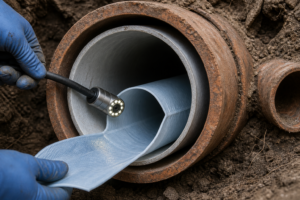
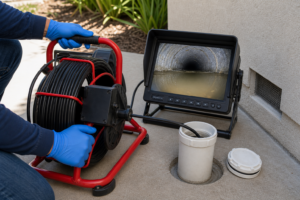
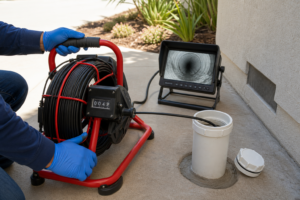
The first step is a sewer camera inspection of the kitchen branch line. This shows exactly where the restriction is, what is causing it, and how much of the pipe is affected.
If the pipe is intact but heavily scaled, hydrojetting scours the interior walls clean. A hydrojet produces 3,000 to 4,000 PSI of water pressure, which strips away decades of grease, mineral scale, and corrosion buildup that a snake cannot touch. For most Glendale kitchens dealing with chronic slow drains, hydrojetting solves the problem in a single visit.
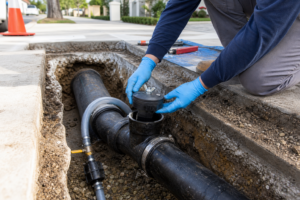
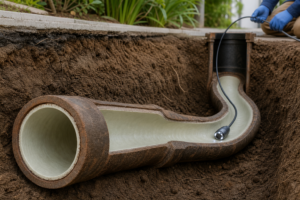
If the camera shows the cast iron has corroded through or collapsed in sections, you are looking at a pipe replacement – either traditional or trenchless. Either way, a camera inspection reveals the truth before any money is spent on the wrong fix.
Stop Clearing the Same Clog Every Month
The homeowners who call us most often from Glendale are not dealing with new problems. They are dealing with problems that have been temporarily fixed three or four times already. Each time a snake creates a temporary channel, the homeowner assumes the drain is fixed. Each time the clog returns, they spend another $150 to $200 on the same temporary solution.
Over the course of a year, that adds up to more than the cost of a permanent fix. At Coast to Coast Plumbing and Rooter, we would rather solve the actual problem once than collect repeat service fees for the same kitchen drain.
Glendale Kitchen Drains Deserve a Permanent Solution
If your kitchen drain is clogging more than once every few months, something structural is going on inside that pipe. A camera will show it. Hydrojetting or a targeted repair will fix it. And you will stop wasting money on temporary solutions that do not last.
We serve all of Glendale, Burbank, Los Angeles, and surrounding cities. Call 310-275-5800 to schedule a camera inspection and get a real answer.