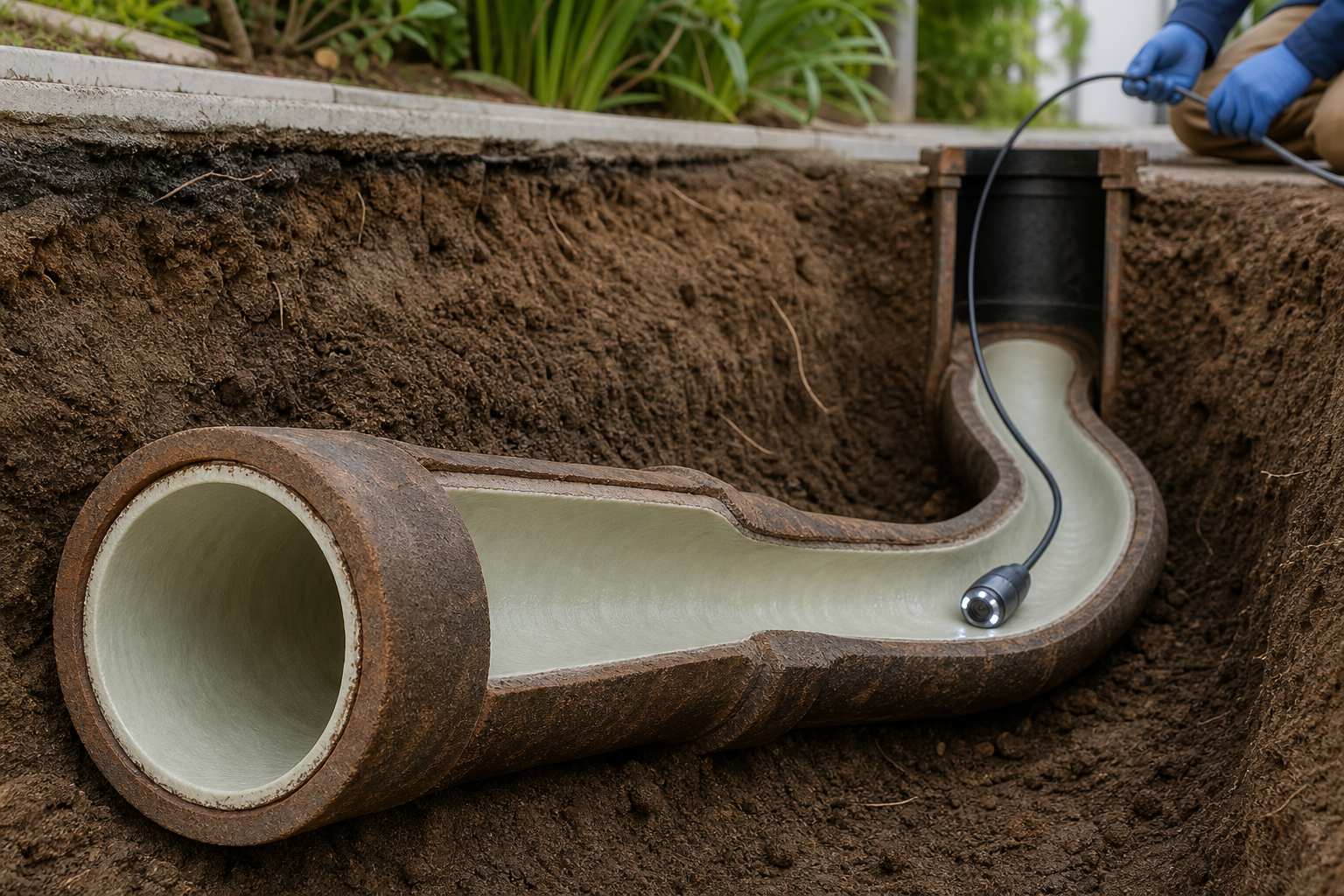



A sewer line with multiple bends may be suitable for cured-in-place pipe lining, but the bend count by itself does not answer the question. Gradual changes in direction through an otherwise continuous, stable pipe are different from sharp fittings, severe offsets, crushed sections, or a pipe that has lost its shape. A plumber must inspect the route, confirm access, clean the host pipe, and evaluate the actual geometry before recommending a liner.
The important question is not simply, “How many bends are there?” It is whether the liner can be installed and cured evenly through the route while maintaining a dependable opening, preserving required connections, and avoiding folds or restrictions. The existing pipe must also provide a usable path. Lining creates a new interior surface; it does not move a collapsed sewer back into alignment or correct the slope of a low section.
A Curved Route Does Not Automatically Rule Out Lining
Residential sewer laterals rarely travel in a perfectly straight line. A pipe may turn around a foundation, shift direction toward the street, pass through fittings, or connect sections installed at different times. Some direction changes are broad sweeps that maintain a smooth interior path. Others are tighter bends that make camera travel, cleaning, liner placement, and curing more difficult.
Several physical details matter together:
- The inside diameter before and after each change in direction.
- Whether the bend is gradual, tight, deformed, or created by a shifted joint.
- The pipe material and condition on both sides of the bend.
- Whether roots, scale, grease, or loose material narrow the route.
- Whether the line changes diameter or material at a transition.
- The locations of cleanouts, branch connections, and the public-main connection.
- Whether installation equipment can reach the full repair section from a controlled access point.
Two pipes with the same number of bends can require different repair plans. One may have smooth, serviceable sweeps. The other may have an offset joint that leaves a ledge, a flattened section, or a tight fitting that restricts the liner. The camera record and measurements are more useful than a bend count taken from an old sketch or an estimate from the surface.
The Host Pipe Must Still Provide a Continuous Path
During trenchless pipe lining, a resin-saturated liner is installed inside the existing pipe and cured to form a new interior. The host pipe helps define the route and shape. That is why its structural condition matters even though the finished liner can bridge some cracks and seal vulnerable joints.
A pipe with intact walls and a workable opening may remain a lining candidate even when its route changes direction. A pipe with a collapsed section, major loss of shape, missing segment, or severe misalignment may not provide a reliable path for installation. Forcing material through an unknown obstruction is not a substitute for diagnosis.
The same principle applies to a sewer belly. A liner generally follows the route that already exists. If the pipe has settled and holds water because its grade is wrong, lining the interior does not lift that low spot. The condition may still need a different repair even if the pipe wall could accept a liner.
Cleaning Comes Before a Reliable Lining Decision
Heavy buildup can make a bend look tighter than it is and can hide cracks, offsets, or changes in material. Roots may enter at a joint and obstruct the camera. Grease or scale may reduce the usable diameter. Standing water can block the view of the lower pipe wall.
Professional cleaning is often needed before final measurements and liner planning. The cleaning method must fit the pipe material, condition, diameter, access, and obstruction. An older or visibly damaged line should not be treated as though maximum force is always the answer.
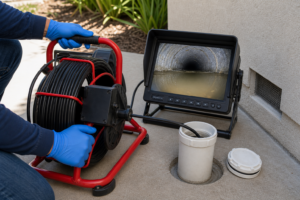
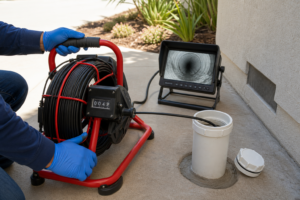
After loose material is removed, a sewer camera inspection can document the route more clearly. Useful footage shows the camera entry point, direction of travel, pipe material, transitions, joints, defects, standing water, and approximate distances. If the camera cannot pass a section, the reason should be investigated rather than assuming that a liner can pass where the camera could not.
Bend Shape Matters More Than a Simple Number
A broad directional change leaves more room for the liner to follow the host pipe without bunching. A tight or irregular change places more demand on the liner design and installation method. A severe offset is not merely a bend; it is a misalignment between pipe sections. That ledge may reduce the opening, catch debris, or prevent equipment from moving through the line.
The installer also needs to evaluate what is happening immediately before and after the change. A bend followed by a diameter reduction, damaged joint, or branch connection may require a different plan than the same bend in a uniform pipe. The length of the repair, access direction, and ability to control the liner during installation and curing also affect feasibility.
No single bend angle guarantees a yes or no without the rest of the pipe information. A responsible recommendation should identify the specific limiting condition shown on the footage or measurements, not rely on a general claim that flexible material can go anywhere.
Access Can Change the Installation Plan
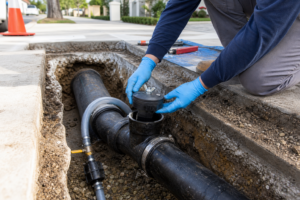
The available cleanout or repair opening determines where equipment enters and which direction it must travel. A route that is difficult from one access point may be evaluated differently from another, but adding access is a project decision rather than a homeowner task. Do not remove a cleanout cap, dig toward a suspected sewer route, or insert rented equipment to test a bend.
The plumber should confirm:
- Which opening reaches the intended repair section.
- Whether the line can be cleaned and inspected from that point.
- Whether the equipment can move through the full route without uncontrolled force.
- Where the liner begins and ends relative to defects, transitions, and connections.
- How the installation and cure will be monitored.
- How the completed liner will be inspected before normal use resumes.
Access limitations do not automatically mean that the whole sewer must be excavated. They do mean the estimate should explain how the installation will be performed and verified.
Branch Connections and Transitions Need Their Own Review
A sewer lateral may receive flow from branch lines before it reaches the street. Lining across a connection without a plan could obstruct that opening. The number, size, condition, and exact location of connected branches must be documented before work begins.
Some projects allow branch openings to be preserved or reopened with specialized equipment. Other layouts may require direct access or a different repair boundary. A homeowner should not assume that every connection will be handled the same way or that a camera view from one cleanout identifies every branch.
Material transitions also deserve attention. Clay, cast iron, and plastic sections may meet at couplings or prior repairs. The transition can change diameter or create an internal step. Camera footage, measurements, and the proposed liner limits should show how those changes will be handled.
What Pipe Lining Cannot Correct
Lining can create a new continuous interior through a suitable host pipe, but it is not a universal structural reset. It does not automatically correct:
- A fully collapsed or crushed pipe section.
- A major offset that blocks a dependable path.
- A missing section or open void with inadequate support.
- A belly or low spot caused by failed grade.
- An undersized sewer that cannot serve the required flow.
- A connection whose condition or geometry cannot be preserved safely.
- An access problem that prevents controlled installation and verification.
These findings do not always require the same alternative. A localized defect may support a sectional repair. A failed line that still offers a suitable route may be considered for pipe bursting. A collapse, connection problem, or section under a difficult public area may require targeted excavation and coordination. The repair should follow the condition and location documented in the sewer.
Compare the Repair Options Against the Same Evidence
If more than one method is proposed, ask each contractor to base the recommendation on the same camera record and measurements. A meaningful comparison identifies which defects are being addressed, which sections remain unchanged, how branch connections are handled, where access is required, and how the finished work will be verified.
sewer line repair and replacement may involve lining, bursting, a sectional repair, or excavation depending on the route and condition. The least disruptive method is only useful when it can correct the actual problem. Avoid choosing solely by the size of the excavation or a claim that one method works for every pipe.
Before agreeing to a plan, ask:
- Can I see the footage at every bend, offset, transition, and damaged section?
- Where did the camera enter, and did it reach the full proposed repair length?
- Was the line cleaned before the final eligibility decision?
- What is the measured diameter through the narrowest point?
- Are any sections collapsed, deformed, unsupported, or holding water because of grade?
- Which branch connections cross the proposed liner, and how will each one be handled?
- What access points are required for installation?
- Which conditions make lining suitable here, and which findings would change the method?
- How will the liner be checked after curing?
- Will I receive final footage or another record showing the completed route?
Clear answers should connect the repair method to visible conditions. If the recommendation changes after cleaning or better footage, ask for the revised finding in writing.
Arrange a Trenchless Sewer Evaluation in Los Angeles
Multiple bends do not automatically prevent sewer pipe lining, and flexibility alone does not make every curved line suitable. The route, usable diameter, access, branch connections, host-pipe shape, grade, and structural condition must work together.
If you are comparing sewer repair options for a Los Angeles property, contact Coast to Coast Plumbing and Rooter. The team can inspect and document the sewer route, explain whether the bends and pipe condition support lining, and compare another repair direction when the existing pipe cannot provide a dependable installation path.