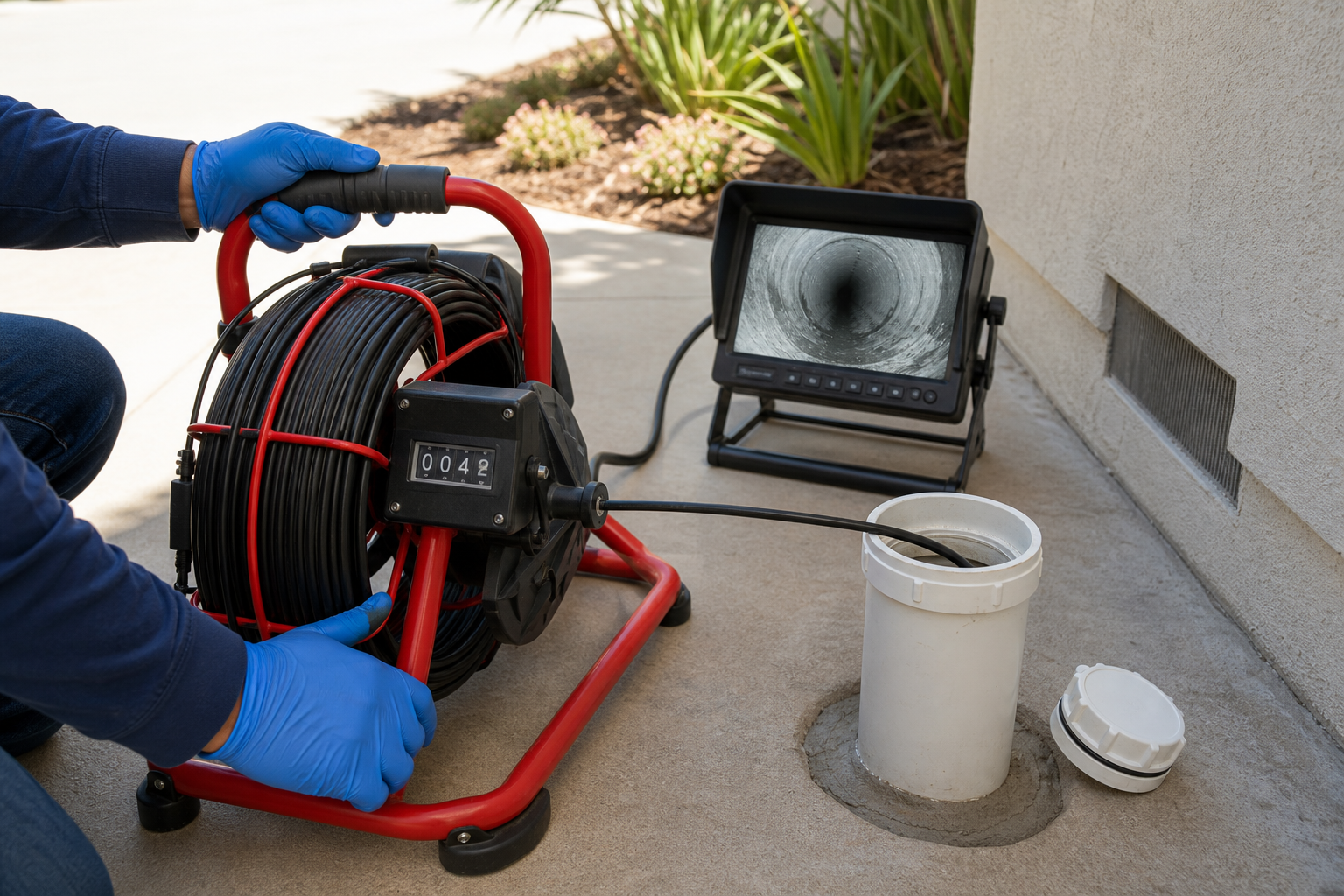



On a sewer inspection system equipped with a distance counter, the number estimates how much camera cable has advanced from a chosen starting reference. It helps a plumber relate a visible blockage or damaged area to an approximate distance along the inspected pipe route.
The reading is not the same as a straight-line measurement across the yard. It does not provide depth, identify property ownership, locate buried utilities, or establish an exact place to excavate by itself. The access point, pipe route, cable behavior, camera setup, and any corroborating locating work all affect how the number should be interpreted.
What the Counter Actually Measures
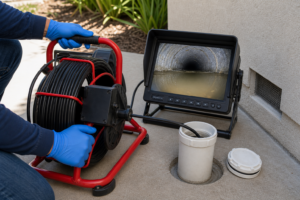
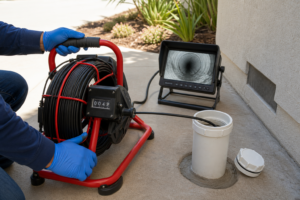
A sewer camera travels through a drain or sewer line on the end of a flexible cable. Depending on the inspection system, a counter may estimate cable movement as the cable leaves the reel or passes through a measuring mechanism. The displayed number is tied to the system’s chosen reference point, often near the reel or access opening.
If the counter starts at zero as the camera enters a cleanout, a reading of 42 feet generally means the system estimates that about 42 feet of cable has advanced from that reference. That can help the plumber return to the same section of footage, compare multiple observations, and describe where a finding appeared along the route the camera followed.
The number becomes useful only when its starting point is clear. A reading without a known access location, direction of travel, or starting reference has limited value. If a report lists a distance, ask which opening the camera entered and whether the measurement began at the cleanout, the reel, or another marked point.
Why the Starting Point Changes the Meaning
A camera can enter the drainage system through different access points. A usable sewer cleanout may provide a route toward the street connection, back toward the building, or into a branch, depending on the fitting and pipe layout. The same numerical reading can refer to different physical areas when the camera starts from a different opening or travels in another direction.
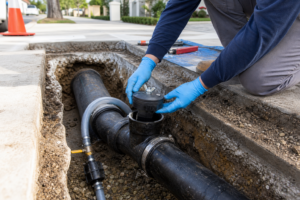
That is why cleanout access before a camera inspection matters. The plumber first needs to understand which line the opening serves and where the cable can travel. A counter reading measured from an exterior cleanout cannot automatically be transferred to a toilet, roof vent, or another cleanout as though every route were identical.
The access point also affects whether the camera can reach the area of concern. Tight bends, fittings, standing water, debris, or a restriction may stop the camera before it reaches the entire line. The last number shown is then the estimated cable travel to the stopping point, not proof that the remainder of the sewer is clear.
Why Along-Pipe Distance Is Not a Surface Coordinate
Sewer piping rarely runs as a perfectly straight, level line from the access point to the street. The route may turn around a foundation, pass through fittings, change direction at connections, or follow an alignment that is not visible from the surface. Cable travel follows that route.
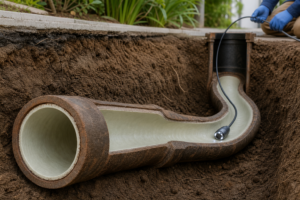
An estimated 42 feet of cable inside the pipe may therefore correspond to less than 42 feet in a straight line across the property. Bends add length to the route. A cleanout may be offset from the building wall. The pipe may angle across the lot rather than run perpendicular to the street.
The counter also does not measure depth. A finding that appears 42 feet along the inspected route could be shallow or deep, depending on the sewer’s slope and the property layout. The reading alone cannot tell a homeowner where to cut concrete, open a wall, or excavate soil.
Treat the number as a way to narrow the section of pipe that deserves attention. A repair location should be based on the footage, the known access point, the likely pipe route, and whatever additional locating or verification the conditions require.
What Can Affect the Reading
A distance counter is a diagnostic aid, not a survey instrument. Its estimate may be affected by how the equipment is set up and how the cable moves during the inspection.
Factors that can influence the reading include:
- Where the counter was zeroed or reset.
- Whether loose cable remained between the reel, measuring point, and pipe opening.
- How much the cable bent or bowed while passing through the line.
- Whether the camera had to move forward and backward around a fitting or obstruction.
- Whether the reel or measuring mechanism was configured for the cable being used.
- Whether the plumber changed access points or inspection direction.
- Whether the camera stopped before reaching the intended section.
These limits do not make the counter useless. They explain why the reading should be documented with context rather than treated as a standalone answer. A clear inspection record identifies the entry point, direction, footage, observed condition, and approximate distance together.
How the Camera Image and Counter Work Together
The camera shows visible conditions inside the section it reaches. The counter helps associate those conditions with an estimated position along the route. Neither signal is complete without the other.
For example, the monitor may show standing water, retained debris, root entry, a separated joint, deformation, or another visible obstruction. The counter can help note where that image appeared relative to the starting reference. It cannot prove the pipe’s exact depth, remaining service life, ownership, or the correct repair on its own.
Water and debris can also block the lens. A severe restriction can prevent the camera head from passing. In those situations, drain cleaning may be discussed so the pipe wall can be viewed more clearly, but the appropriate order depends on the symptoms and conditions found. A distance reading taken at an obstructed lens does not identify the obstruction’s material or cause.
When a Separate Locator May Be Used
Some sewer camera heads or inspection systems include a compatible transmitter, sometimes called a sonde. When that feature is available and conditions permit, a separate receiver may be used above the surface to help locate the camera head and estimate depth. Not every camera system, property, or inspection uses this workflow.
The two measurements answer different questions:
- The distance counter estimates how far the cable traveled from its reference point along the pipe route.
- A compatible transmitter and surface receiver may help identify where the camera head is beneath the property and may provide a depth estimate.
Even surface locating does not replace utility marking, site evaluation, access planning, or other requirements that may apply before excavation. It also does not determine who owns a pipe section or who is responsible for a repair.
When no compatible locating feature is used, the plumber may still narrow a finding by comparing the counter reading with visible cleanouts, known building exits, pipe routing, prior records, symptoms, and other diagnostic evidence. The appropriate method depends on what decision must be made next.
How the Reading Helps With Repair Planning
A documented distance estimate can prevent the entire sewer line from being treated as one unknown problem area. It can focus attention on a section, help compare repeat inspections, and support a more informed discussion about access or further testing.
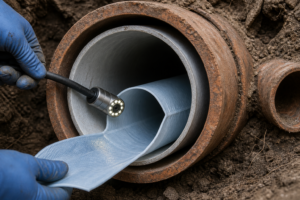
If footage shows a structural problem, sewer line repair or replacement can be considered based on the condition and location actually confirmed. The counter may help narrow where the finding appeared, while surface location, depth, pipe material, access, surrounding construction, and the extent of damage influence the repair approach.
A number on a monitor should not be the only basis for an excavation recommendation. Ask to see the relevant footage and understand how the finding was located. If the pipe route is uncertain, ask whether another access point, a repeat pass, surface locating, cleaning, or a different diagnostic step would reduce uncertainty.
Questions to Ask About a Distance Reading
Useful questions can turn a raw number into information you can act on:
- Which access point did the camera enter?
- In which direction did the camera travel?
- Where was the counter set to zero?
- What did the footage show at the stated distance?
- Could bends, slack, standing water, or an obstruction affect the estimate?
- Was the camera head located from the surface, or is the number only cable travel?
- Is the depth known, estimated, or not yet measured?
- Does the finding need cleaning, another camera pass, locating, or repair evaluation?
- Can the relevant footage and distance be included in the inspection record?
Avoid opening a cleanout or feeding anything into the line yourself to confirm the number. A backed-up sewer can release wastewater when a cap is removed, and improper equipment can become lodged or damage the piping.
When a Sewer Camera Inspection Is Worth Discussing
A camera inspection can be useful when symptoms suggest a problem deeper than one fixture or when repeated clearing has not explained why drainage trouble returns. Situations worth discussing include:
- Several fixtures slowing or backing up together.
- A toilet flush causing water to rise in a tub or shower.
- The same drain clog returning after prior clearing.
- Wastewater appearing at a low drain or near a cleanout.
- A sewer odor returning without an obvious dry trap.
- A repair being considered without a confirmed affected section.
- Prior footage identifying a condition that needs to be compared over time.
These symptoms do not prove a specific defect. They help the plumber decide whether direct inspection, cleaning, locating, or another test is appropriate.
Arrange a Sewer Camera Inspection in Los Angeles
If recurring backups, multi-fixture drainage problems, or suspected sewer damage are affecting your Los Angeles property, arrange a sewer camera inspection with Coast to Coast Plumbing and Rooter. The inspection can document visible conditions and help narrow where along the accessible pipe route a problem appears.
Contact Coast to Coast Plumbing and Rooter to describe the symptoms, available cleanout access, and any prior cleaning or inspection. Ask how distance readings will be referenced and what additional verification may be needed before a repair decision.