


A plumber often needs sewer cleanout access because the cleanout provides a direct, serviceable entry into the drain or sewer line. It allows the inspection camera to enter the piping without unnecessarily disconnecting a fixture, and its location can give the plumber a more useful path toward the section causing trouble.
The cleanout must still be located, exposed, intact, and safe to open. A buried cap, damaged fitting, blocked approach, or active sewage backup can change the setup. Homeowners should not remove the cap before the appointment because a backed-up line may release wastewater when the fitting is opened.
What a Sewer Cleanout Provides
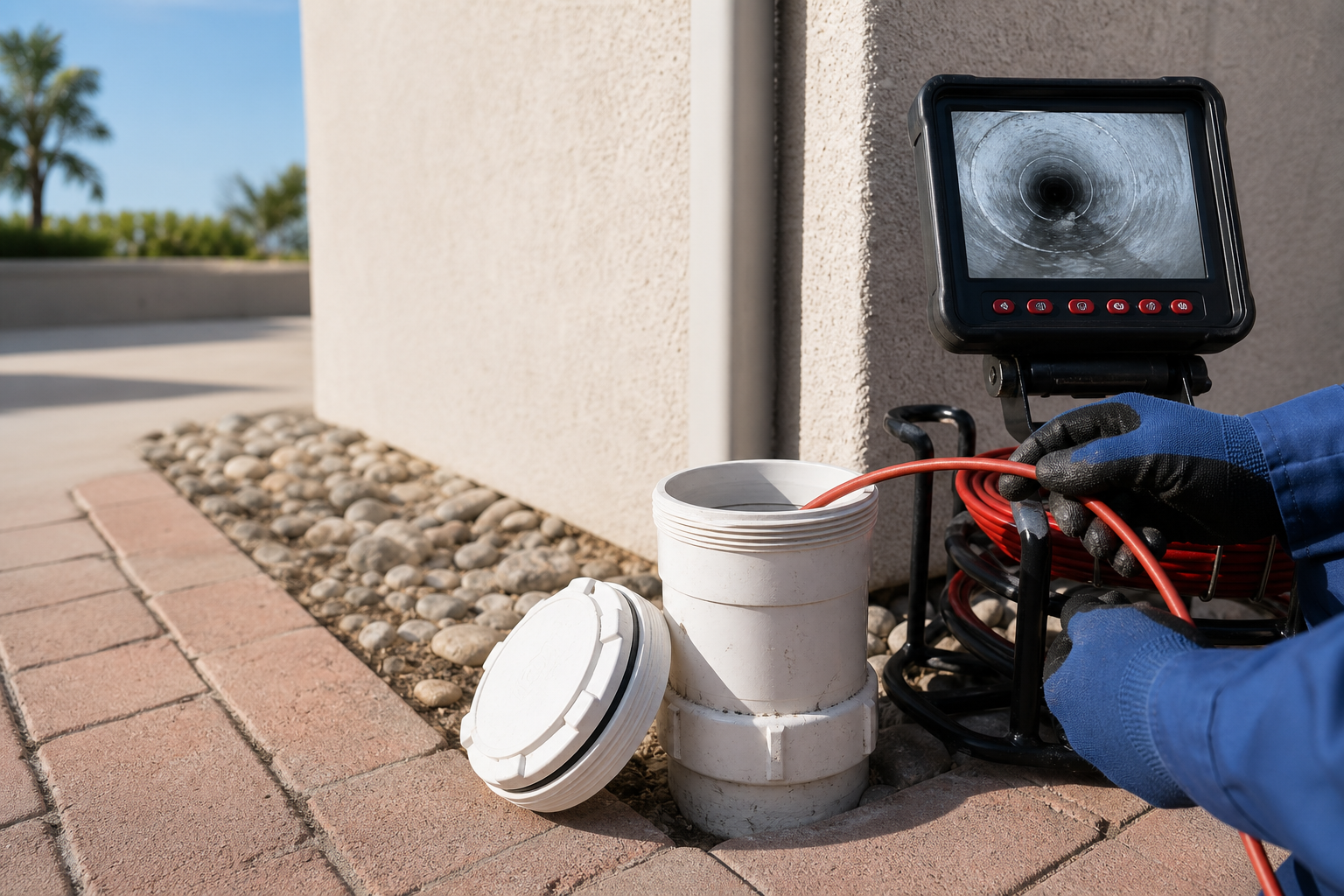
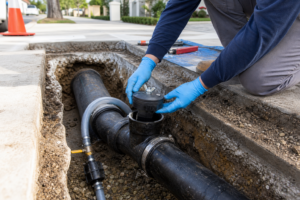
A sewer cleanout is a capped access fitting connected to a drain or sewer line. Depending on the property and piping layout, it may be outside near an exterior wall, in a yard or planting area, beside a driveway, inside a garage, or in another serviceable location. Some systems have more than one cleanout so different sections can be reached.
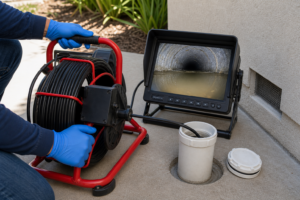
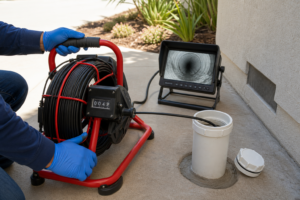
The fitting is intended to give plumbing equipment an entry point. For a sewer camera inspection, the plumber can feed a flexible camera cable into the open cleanout and watch the live image on a monitor as the camera travels through the pipe.
That entry point matters because a camera cable has to follow the physical route of the drainage system. The cleanout’s direction, pipe size, bends, connections, and distance from the suspected problem influence which section can be viewed. Access to one cleanout does not automatically guarantee a complete view of every branch or the entire sewer lateral.
Why the Camera Entry Point Matters
The quality of an inspection depends on more than owning a camera. The plumber needs an entry point that permits controlled cable movement and provides a useful route toward the suspected restriction or damaged area.
A usable cleanout can help by providing:
- A direct opening into the drain or sewer line.
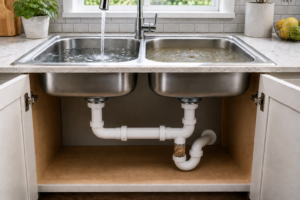
- Space to guide the cable without forcing it through a sink, tub, or toilet trap.
- A known starting point for tracking how far the camera has traveled.
- A way to observe whether wastewater is standing at the access point before insertion.
- A practical route for evaluating the line before recommending cleaning or repair.
The cleanout location also helps the plumber choose which direction to inspect. Some fittings provide access toward the street or main connection, while others may face back toward the building. The actual configuration must be confirmed at the property rather than assumed from the cap’s visible position.
What the Plumber Checks Before Opening the Cleanout
Before removing the cap, the plumber evaluates both the fitting and the surrounding work area. The goal is to avoid damaging the access point, releasing wastewater unexpectedly, or starting from an entry that cannot reach the pipe section in question.
The inspection may include checking:
- Whether the visible fitting is actually connected to the affected drain or sewer line.
- Whether the cap and threads are intact, corroded, cracked, painted over, or tightly seized.
- Whether the cleanout is accessible enough to operate the camera reel safely.
- Whether landscaping, stored items, concrete, soil, or another surface obstructs the approach.
- Whether standing water, staining, odor, or recent overflow suggests an active backup.
- Whether another available cleanout offers a safer or more useful direction.
Do not loosen a cap to see whether water is behind it. A main-line blockage can leave wastewater standing above the cleanout opening. The plumber can prepare the area and open the fitting in a controlled way based on the symptoms and visible conditions.
What Happens If the Cleanout Is Buried or Blocked
A cleanout can become hard to find when landscaping changes, soil covers the cap, flooring is installed, storage fills the work area, or a prior repair leaves the fitting below the finished surface. A cap may also be present but too damaged or obstructed to use safely.
If you know where the cleanout is, clear ordinary lightweight belongings from around it before the appointment. Do not excavate deeply, cut a fitting, force a cap, move heavy hardscape, or make an opening in a wall or floor. The visible location may not reveal the pipe route, and an unnecessary attempt can damage the drainage system or expose wastewater.
When the cleanout cannot be used, the plumber evaluates the existing system before choosing another approach. Depending on the piping and the purpose of the inspection, options may include a different cleanout, a suitable branch connection, temporary fixture removal, limited inspection from another entry, repair of the damaged access point, or discussion of a new service access. No single alternative works for every property.
The need for a different entry does not automatically mean the sewer line itself is damaged. It means the inspection path has to be established before reliable footage can be collected.
What Sewer Camera Footage Can Reveal
Once the camera enters the line, the plumber can observe visible conditions along the route it reaches. Footage may show retained debris, heavy buildup, root entry, separated or offset joints, cracks, a change in pipe material, standing water, deformation, or another obstruction. It can also show a section that appears open even though symptoms are occurring elsewhere.
Camera footage is diagnostic evidence, not a complete repair decision by itself. A camera cannot always establish exact depth, ownership, remaining service life, or the cause of every wet area. Water or debris may block the lens. Sharp bends can stop cable travel. A restriction may need drain cleaning before the pipe wall can be viewed clearly.
The plumber interprets the footage together with the symptoms, drain behavior, access route, pipe layout, and any other testing required. If a structural problem is visible, sewer line repair or replacement can be discussed based on the location and condition actually found.
How to Prepare for a Camera Inspection
Preparation should make the access area easier to evaluate without opening the plumbing yourself. Tell the plumber which fixtures are affected, when the symptoms began, whether water backs up at the lowest drain, and whether any cleaning or repair was recently attempted.
If the cleanout location is known, remove small movable items from the surrounding area and keep pets and children away from the work zone. Share any photos or prior inspection records that identify the pipe route. Leave the cap in place.
Limit water use if several fixtures are backing up, sewage is appearing at a low drain, or wastewater has surfaced near the cleanout. Continued use can add more water behind the restriction. Avoid chemical drain products before the appointment, and tell the plumber if any product has already been used.
If the cleanout cannot be located, that is useful information rather than a reason to guess. The plumber can evaluate visible piping, fixtures, symptoms, and likely access routes before recommending the safest next step.
When a Camera Inspection Is Worth Discussing
Cleanout access becomes especially useful when the problem appears deeper than one fixture. Consider arranging an inspection when:
- The same drain backs up after repeated clearing.
- Several fixtures slow down or gurgle at the same time.
- A toilet flush causes water to rise in a tub or shower.
- Wastewater appears at the lowest drain in the home.
- Sewer odors return without an obvious dry trap.
- A prior cleaning restored flow only briefly.
- A sewer repair is being considered and the affected section needs to be located.
These symptoms do not prove a particular defect. They show why direct inspection may be more useful than continuing to treat the problem as a simple surface clog.
Arrange a Sewer Camera Inspection in Los Angeles
If recurring backups, multi-fixture drainage problems, or suspected sewer damage are affecting your Los Angeles property, contact Coast to Coast Plumbing and Rooter. The team can evaluate the available cleanout, explain the inspection path, and discuss the next step based on the conditions found in the plumbing.