



Before approving sewer excavation beneath a street, ask for the damaged section to be located, the repair endpoints to be defined, and the responsibility for permits, traffic access, inspections, and surface restoration to be written down. A recurring backup alone does not show that the street must be opened or establish who is responsible for that portion of the sewer.
The proposal should explain why the work extends beyond the yard and how it connects to the inspected problem. Coast to Coast Plumbing offers street excavation sewer repair in Los Angeles. Ask for a property-specific scope before comparing estimates or choosing a repair method.
Locate the Failure Before Defining the Street Work
A sewer can run through the yard, cross a sidewalk, and reach a connection farther into the street. The location of a backup inside the home does not reveal where the underground failure lies. An inspection needs to connect the visible defect to a location that the repair team can identify on the property.
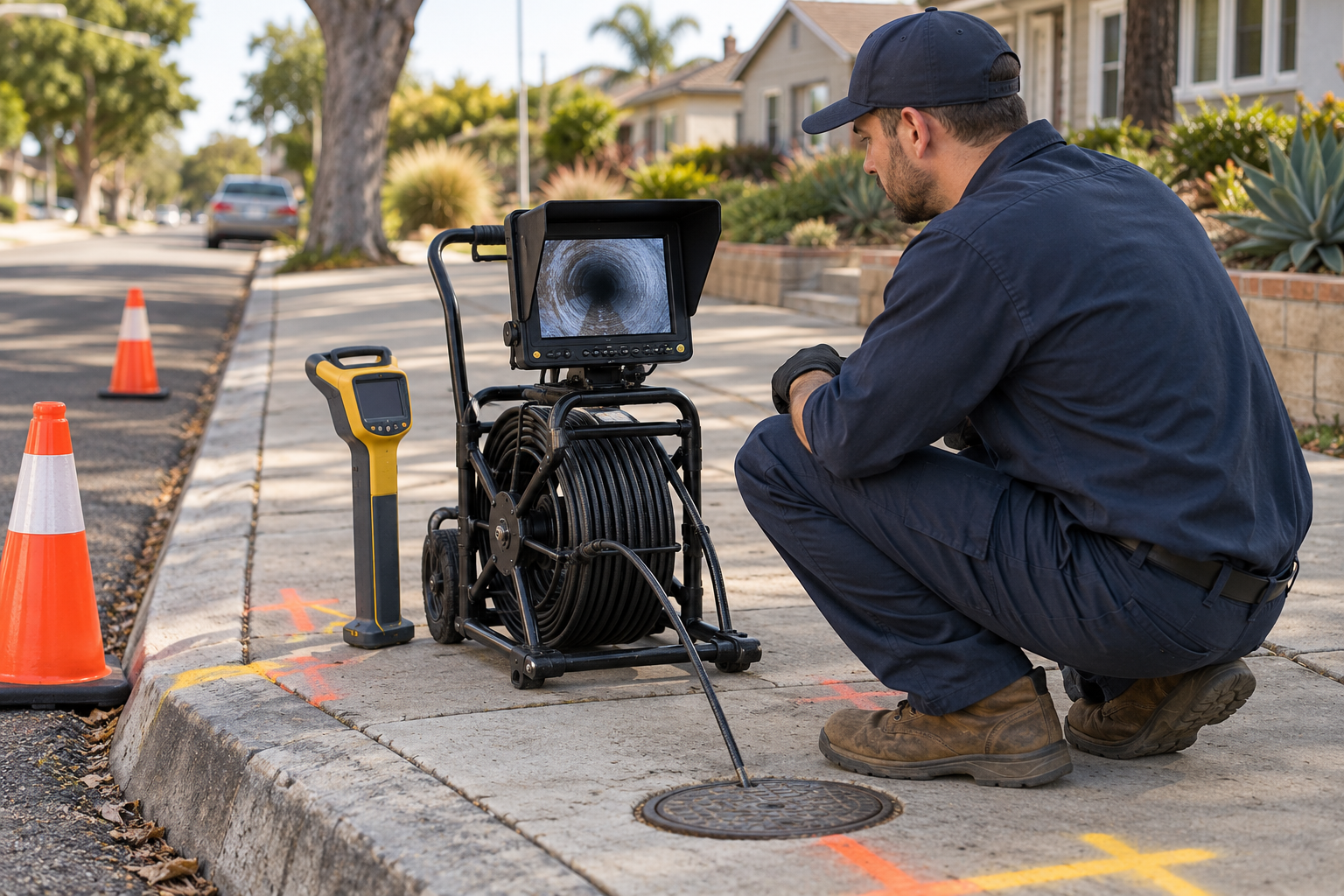
Ask the contractor to explain how the location was established and what remains uncertain. A distance counter on a camera is useful context, but a number on the screen is not a complete excavation plan. The route, access point, depth information, and field locating should support the proposed opening.
If the inspection could not reach the connection or standing water obscured the pipe, that limitation should be stated. Additional evaluation may be needed before the final work limits can be settled. Do not treat an unseen section as confirmed damaged pipe.
Request the Evidence Behind the Excavation Recommendation
A sewer camera inspection can document visible internal conditions in the accessible line. Ask the plumber to show where the footage supports the street portion of the proposed repair, rather than reviewing only a close-up of one defect.
Useful items to request include:
- The access point used and the direction of the inspection.
- The visible defect or obstruction that the repair is intended to correct.
- The located position of that condition relative to the curb and sidewalk.
- The proposed start and end points of the repaired section.
- The condition of inspected pipe immediately before and after those endpoints.
- Any area that could not be inspected or located with confidence.
- What further information would change the scope or method.
Keep the recording and written explanation with your estimate. When two recommendations differ, ask each contractor to discuss the same findings and explain the difference in work limits. A longer excavation should have a reason tied to the line and the property.
Separate the Pipe Location From Ownership and Responsibility
A pipe being beneath public pavement does not, by itself, settle ownership or financial responsibility. Ask the contractor and the authority responsible for that address to identify the private lateral, the public sewer, and the connection included in the work.
Names such as main line, lateral, and city connection are sometimes used loosely in conversation. A drawing with labeled endpoints is more useful than relying on those words alone. Confirm whether the proposal concerns your building sewer, a shared line, a connection, or a public main.
Before authorizing the job, ask who can approve work on the affected section and whether any property manager, neighboring owner, or public agency needs to be involved. Responsibility should be confirmed for the actual address rather than assumed from a different city’s procedure.
Ask Why Excavation Fits the Diagnosed Condition
Street excavation may be proposed when direct access is needed to replace a damaged section, restore a connection, or address a condition that another method would leave unresolved. Ask what the opening will allow the crew to correct and why that access is necessary.
If a trenchless option is also being considered, the comparison should address the same damaged limits. The amount of visible digging does not establish whether a method can solve the problem. Access, connections, existing pipe condition, and the required finished route all matter.
Coast to Coast also offers sewer line repair and replacement. Ask how the recommended street work fits the rest of the line, including any sound section that the proposal would leave in service.
Put Permit and Inspection Tasks in the Written Scope
Ask which approvals and inspections apply to the exact address, the affected public area, and the proposed method. Requirements can depend on the authority responsible for the street and the extent of the work, so a generic statement that permits are included needs more detail.
The proposal should name who will obtain required approvals, arrange inspections, and handle any conditions attached to the work. Ask when those tasks occur and what must happen before excavation or reconnection begins.
Clarify which fees and coordination tasks are included and which remain your responsibility. If requirements are still being confirmed, request a clear explanation of how they could affect the work before you sign a final scope.
Define Pavement and Property Restoration
Pipe repair and surface restoration are different parts of the project. Ask what will be opened and what finished condition the estimate includes. A repair that reaches the street may affect more than the small area where the defect was first located.
Request details about backfill, any required compaction or testing, and the restoration of the affected surface. Ask whether the proposed finish is temporary or final and who will complete any work that occurs after the pipe is repaired.
If a driveway, sidewalk, landscaping, or other private surface may be disturbed, list it specifically. Photographs taken before work can help both parties understand the existing condition without serving as a substitute for a written restoration scope.
Plan Access and Household Restrictions
Discuss how the work zone will affect the household before the crew opens the line. Useful questions include:
- Whether driveway access or parking near the property will be restricted.
- How pedestrians and occupants will be kept clear of the work area.
- Which fixtures must remain unused while the sewer is disconnected.
- Who will tell tenants or other occupants about restrictions.
- Whether a temporary wastewater plan is part of the proposed work.
- Which event, inspection, or test allows normal drain use to resume.
- Who to contact if access needs or the repair schedule change.
Treat stated timeframes as a plan to discuss, not a promise that conditions cannot change. Never enter an excavation, move barriers, or test a disconnected line by flushing a toilet. Ask the crew for instructions that apply to the current repair stage.
Compare Estimates Against the Same Work Limits
Before deciding between proposals, ask each contractor:
- Does the estimate cover the same located section and connection?
- What evidence makes street excavation necessary here?
- Which pipe connections and access points are included?
- Who handles the applicable approvals and inspections?
- Which street, sidewalk, driveway, or landscape surfaces will be restored?
- Is the surface finish temporary or final?
- How will a change in findings be explained and approved?
- What testing or final camera documentation will be provided?
- What portion of the line remains outside the proposed repair?
A lower total may describe a smaller job or exclude restoration that another proposal includes. A larger scope may be justified, but it should be explained. Compare the intended finished result and exclusions before deciding whether the prices describe equivalent work.
Get a Clear Street Sewer Repair Scope
A sound decision begins with a located problem and a written explanation of the repair limits, responsible parties, approvals, access restrictions, and restoration. Ask for unresolved questions to be answered before you authorize excavation.
For a sewer evaluation at a Los Angeles property, call Coast to Coast Plumbing at (310) 275-5800. Share prior recordings and repair records, and ask how the findings support the proposed street work. If sewage is actively backing up, stop water use that drains into the affected line and keep people away from contaminated water while arranging service.